Epoxy Floor Colors: How to Choose for Your Garage
Choosing an epoxy floor color comes down to three decisions: the finish (flakes, solid color or metallic), how light or dark the base is, and the topcoat that protects it all. For a garage in Quebec, a mid-tone flake blend under a UV-stable topcoat is the easiest floor to live with. Everything else depends on how the room is used.
Key points
- Three finishes: flakes, solid color, metallic. Each one hides and shows different things.
- A mid-tone flake blend hides dust and sand better than any solid color.
- Epoxy yellows in light. The topcoat has to be UV-stable.
- Standard catalogue colors are included in the price. Custom colors: possible surcharge, up to 1 month lead time.
- No color makes up for poor concrete preparation.
What epoxy floor finishes are there?
Epoxy floors come in three main finishes: flakes, solid color and metallic. Flakes dominate in garages because they texture the surface and camouflage dirt. Solid colors are mostly for shops and offices. Metallic is a decorative finish for rooms where looks come first.
| Finish | What it hides | What it shows | Where it goes |
|---|---|---|---|
| Flakes (mid-tone) | dust, sand, small marks | very little | garage, basement, shop, workshop |
| Solid color | nothing | dust, scratches, tire marks | offices, warehouses, retail |
| Metallic | nothing, it’s a mirror finish | scratches, dust | games room, finished basement, salon, showroom |
In all three cases, Bétonik starts the same way: a 100% solids epoxy base coat on diamond-ground concrete. What changes is what goes on top.
Related: Epoxy garage flooring
Why are flakes the most common choice for a garage?
Flakes are small colored chips broadcast into the wet base coat, then sealed under a topcoat. Sherwin-Williams, one of the major floor coating manufacturers, notes they are typically made of vinyl and come in several sizes, from 1/16″ to 1/4″.
In a garage, the benefit is practical. The speckled pattern breaks up dust, winter sand and small stains. The texture also gives the anti-slip topcoat something to grip. The same manufacturer says a flake floor can be made slip-resistant with textured flakes or an additive in the finish.
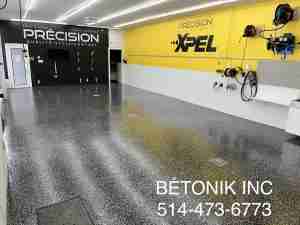
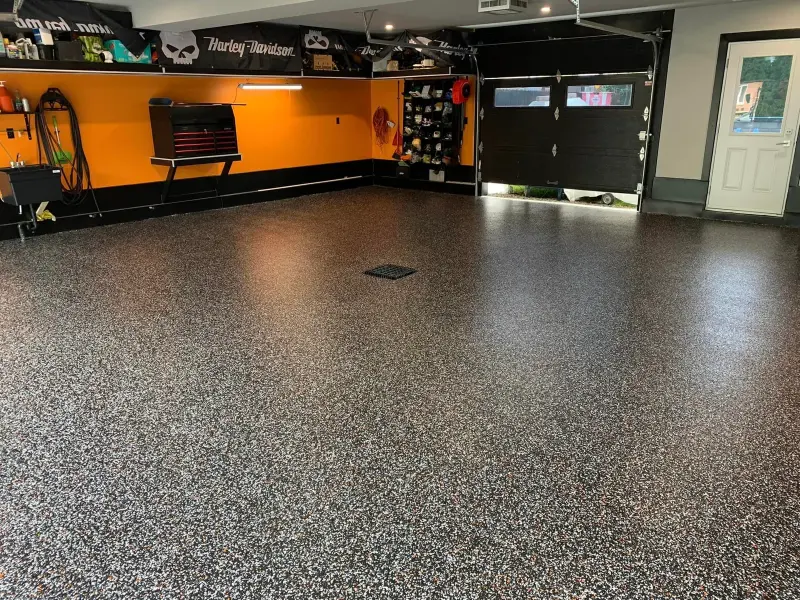
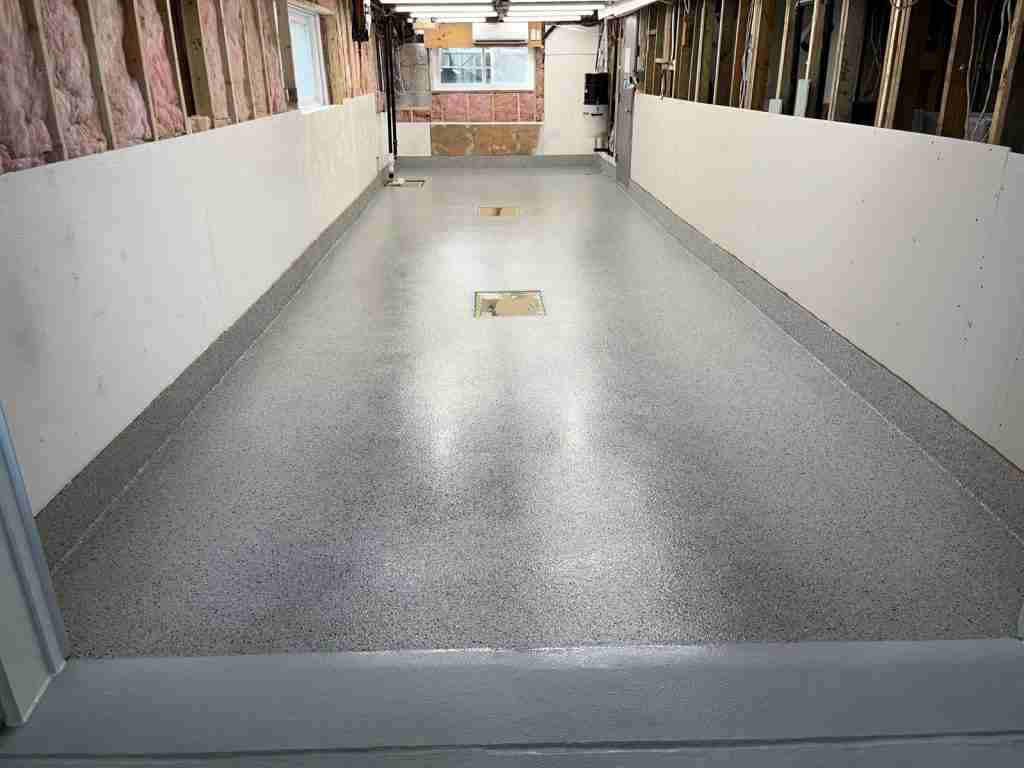
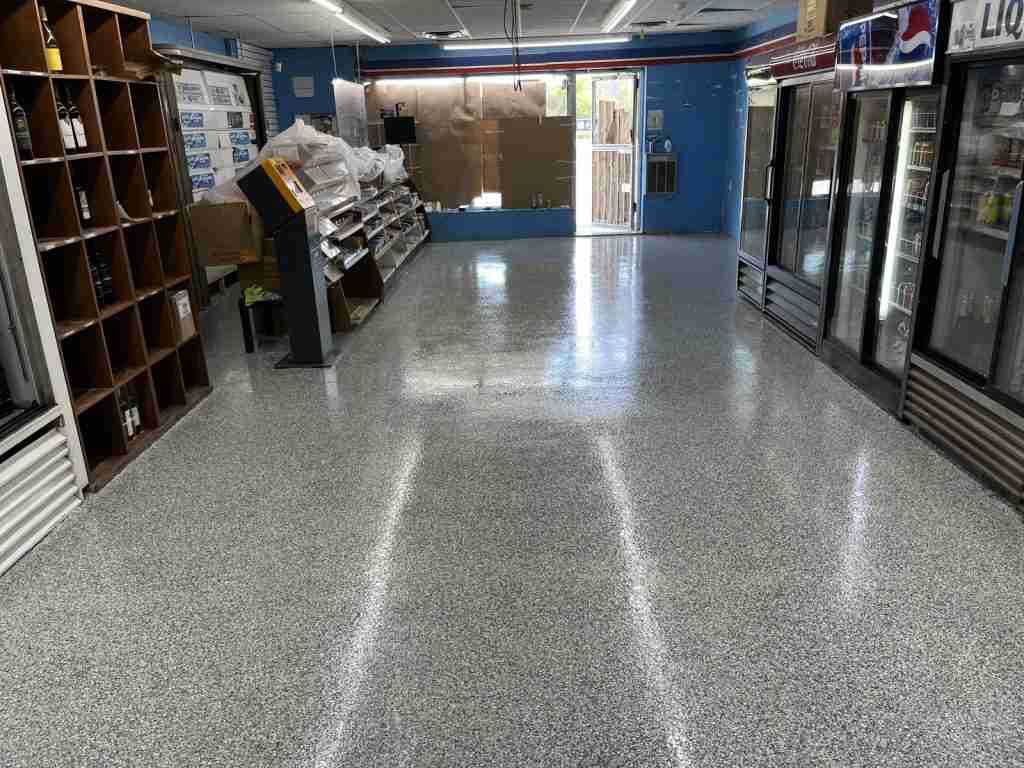
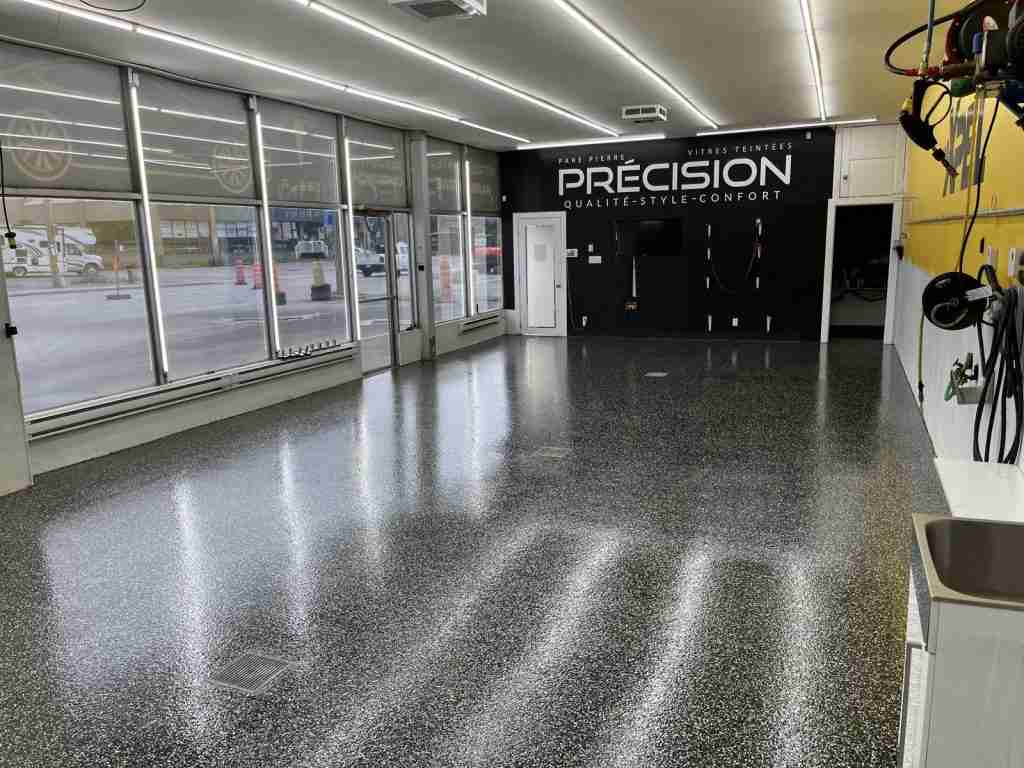
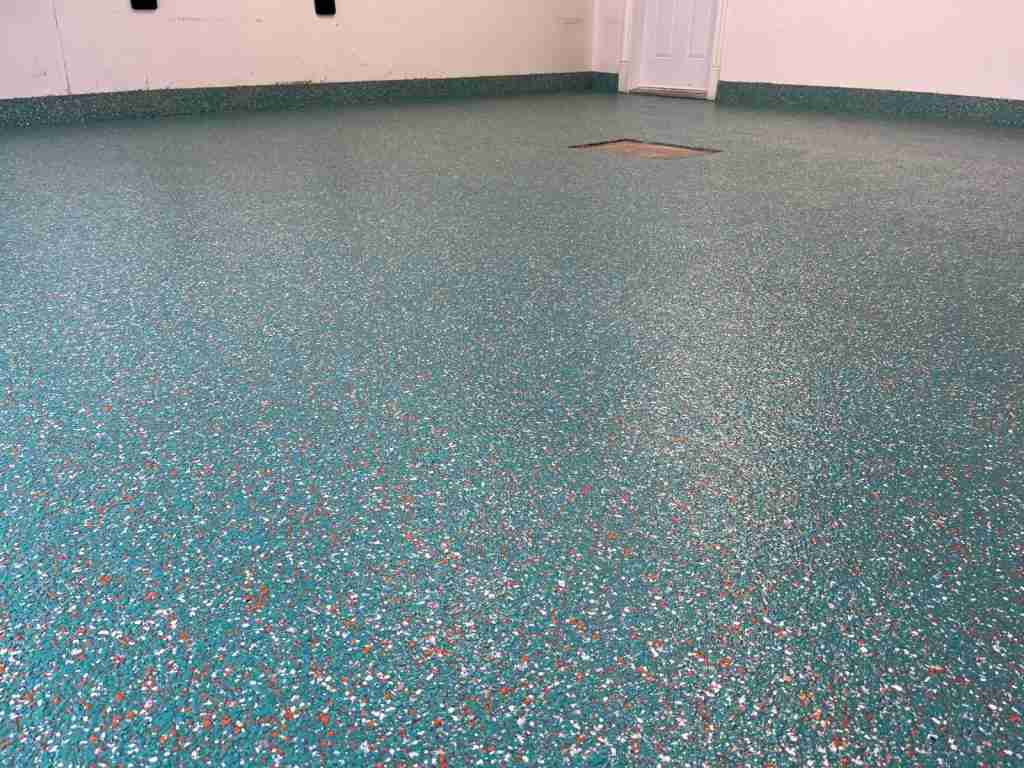
Flakes can cover the whole surface until the base no longer shows, or be sprinkled lightly as an accent. Full coverage gives the even look you see in the photos in this article.
Light or dark flakes: which one stays cleaner?
Mid-tones look cleanest. A very pale base shows dirt and tire marks. A very dark base shows pale dust, sand and salt residue. A grey, beige or grey-black blend blurs both.
Tone also changes how bright the room feels. The U.S. Green Building Council’s LEED lighting guide assumes 20% light reflectance for a floor, versus 50% for walls and 80% for the ceiling. A lighter floor bounces more light back. In a dim garage, a light blend makes a visible difference.
In Quebec, think about salt. The calcium chloride your tires bring in leaves a film when the water dries. Manufacturer OxyChem recommends cleaning up tracked de-icer with warm water as soon as possible. On a solid black floor, that film shows from across the room. On mid-tone flakes, far less.
What about colored flakes, blue or turquoise?
Colored flakes work well when the room has a clear purpose: a games room, a home gym, a basement for the kids. You can also add a small share of colored flakes to a grey blend to warm it up without committing to a bold color.
The caution is time. Grey or beige suits the house you have now and the next owner’s. A bold color is a choice for you, not for resale.
When should you choose a solid color?
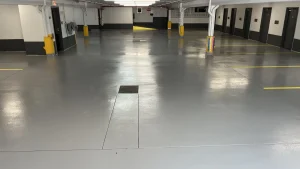
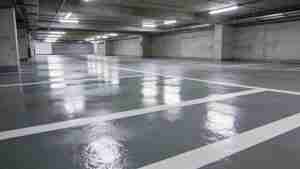
Solid color suits clean, well-lit spaces that are cleaned often: offices, clinics, warehouses, retail. The look is crisp and bright. The downside is that a smooth, single-tone surface shows dust, scratches and tire marks.
On tire marks, coating manufacturer Tuf-Top explains that plasticizers from warm tires migrate into the coating and stain it, and says it has seen this staining on epoxy and urethane alike. On a pale solid color, those marks show. That’s one more reason to keep solid colors for rooms where cars don’t park.
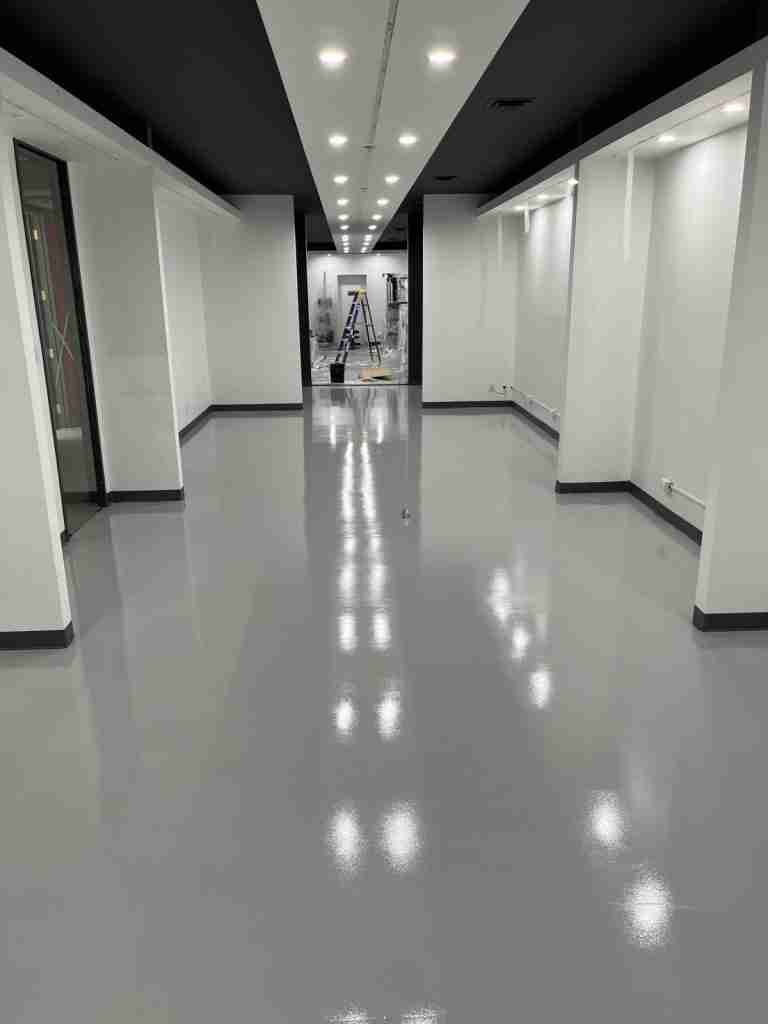
Solid color also has a practical use: marking. On stairs or a ramp, stair nosings can be painted yellow. In the U.S., the workplace safety rule makes yellow the color for tripping and falling hazards. The same logic works at home.
Related: Commercial epoxy flooring
Is a metallic epoxy floor a good idea in a garage?
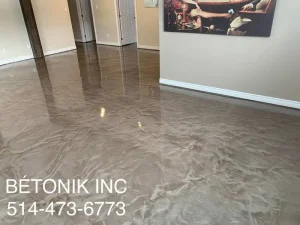
Metallic is the most striking finish, but not the most practical one for a garage you park in. The effect comes from metallic pigments suspended in a high-gloss epoxy. Sherwin-Williams describes the result as one of a kind, with marbling and cloud patterns: no two floors look alike.
This finish is smooth and very glossy. It needs an anti-slip additive in the topcoat if the floor may get wet, and it shows scratches and dust more than a flake floor. It is at its best in a room you live in rather than one you work in.
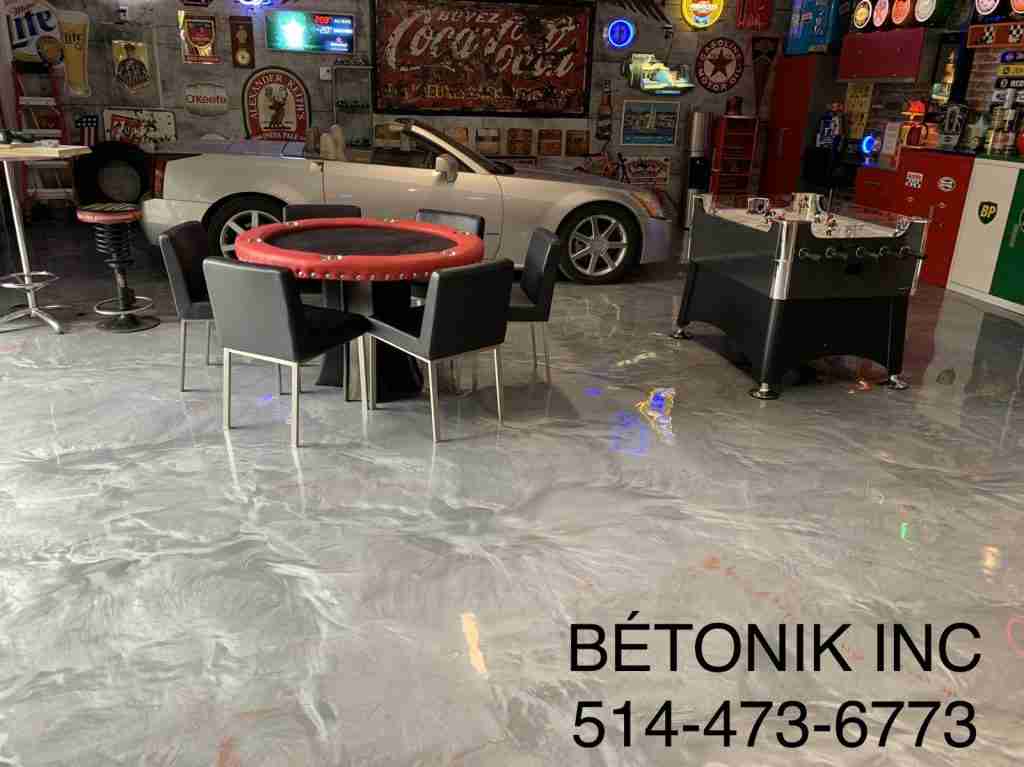
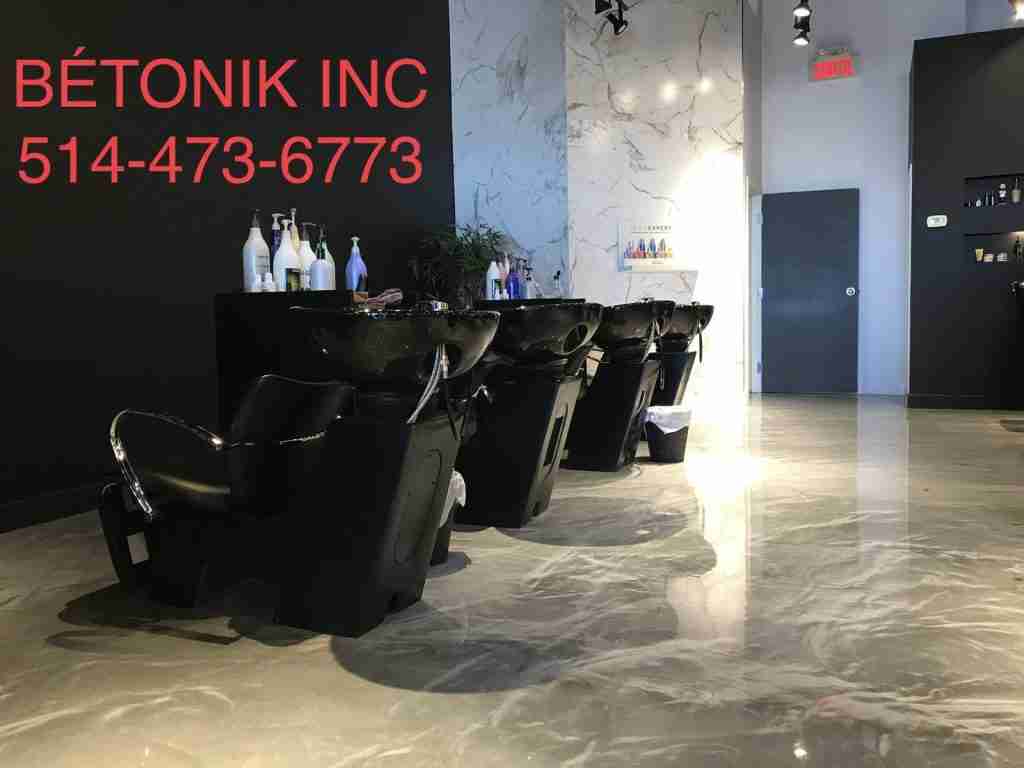
A metallic floor is a custom order. We price it at the estimate, based on the area and the colors you choose.
Related: Epoxy basement flooring
Does an epoxy floor's color yellow over time?
Yes, epoxy on its own yellows in light. Manufacturer High Performance Coatings writes that UV light and even fluorescent indoor lighting break down the resin and turn it yellow. Even the clearest epoxy ambers with time.
That’s why epoxy is never the last coat. It is protected by a UV-stable polyurethane or polyaspartic topcoat. Manufacturers build their flake systems the same way: Sherwin-Williams seals its own under a light-stable urethane. For a garage whose door stays open to the sun, we use a polyaspartic topcoat.
Yellowing shows more on solid white or pale grey than on a flake blend. If you want a very pale tone, the topcoat matters even more.
Related: Polyurea vs polyaspartic
Can color hide poorly prepared concrete?
No. Color is the last decision, not the first. Epoxy that peels is almost always a preparation problem: damp concrete, pyrite, active cracks or a surface that was never ground. No color fixes that.
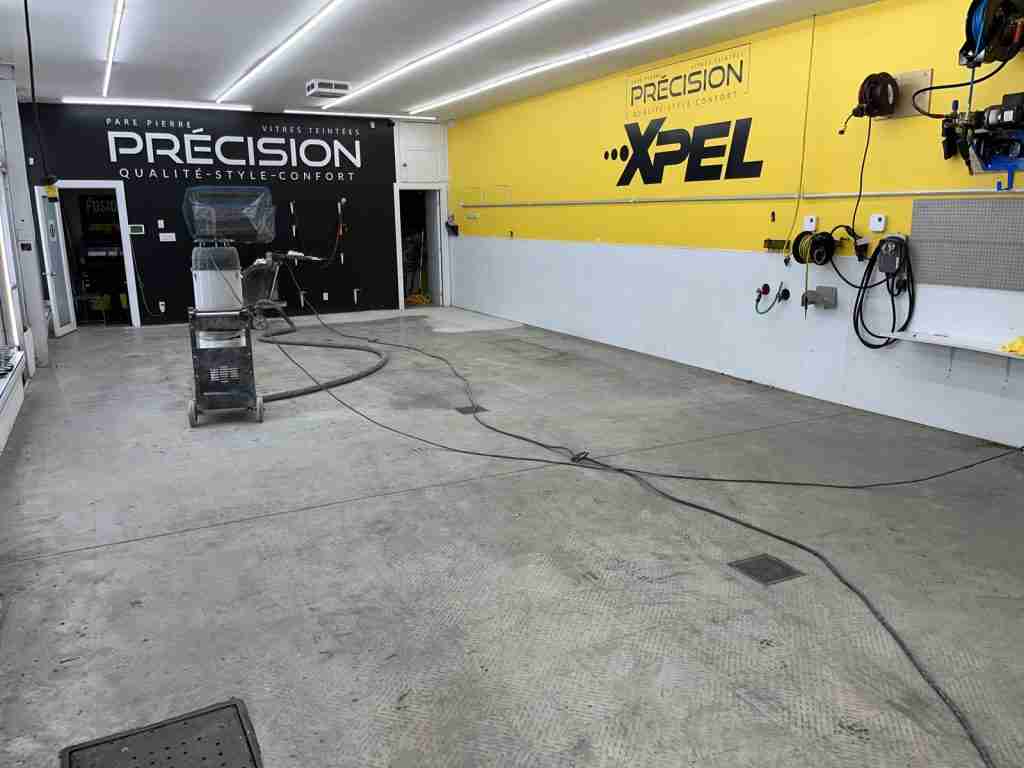
At Bétonik, the order never changes: moisture test, crack and pyrite inspection, diamond grinding, then the base coat. Color comes after, and that preparation is what the 15-year warranty against peeling stands on.
Related: Epoxy floor cost
How do you choose a color with Bétonik?
You choose from real samples, not a screen. Pick from the supplier’s standard samples, or we place a special order. Look at the sample on the floor, in your own garage or basement lighting: a grey can read as beige under warm light.
Standard catalogue colors are included in the $7.00 to $8.50 per square foot price. A custom color or a special flake order may add a surcharge and take up to a month to arrive. If you have a target date, choose early.
Related: Epoxy flooring Montreal
Frequently asked questions
What people ask us about colors.
Which epoxy floor color hides dirt best in a garage?
A mid-tone flake blend: grey, grey-beige or grey-black. The speckled pattern breaks up dust, sand and small stains. A very pale base shows dirt and tire marks. A very dark base shows pale dust and salt residue.
Does an epoxy floor turn yellow?
Epoxy on its own yellows in light, even under indoor lighting. That’s why it is always covered with a UV-stable polyurethane or polyaspartic topcoat. For a garage exposed to the sun, we use polyaspartic.
What are epoxy floor flakes made of?
They are small decorative chips, typically vinyl according to Sherwin-Williams, broadcast into the wet base coat. They come in several sizes and color blends. The topcoat seals and protects them.
Is a metallic epoxy floor slippery?
Metallic is smooth and very glossy. If it may get wet, we add an anti-slip additive to the topcoat. For a garage where you drive in with snow, a flake floor is the safer choice.
Does a custom color cost more?
Standard catalogue colors are included in the base price. A custom color or special order may add a surcharge and take up to a month to arrive. We confirm it at the estimate, before any work starts.
Choosing a floor?
Free estimates across Greater Montreal: we test the concrete, show you samples on site, and you leave with a price per square foot. Call (514) 473-6773.